Los Angeles — Downtown streetcar project gets 30 years of O&M funding


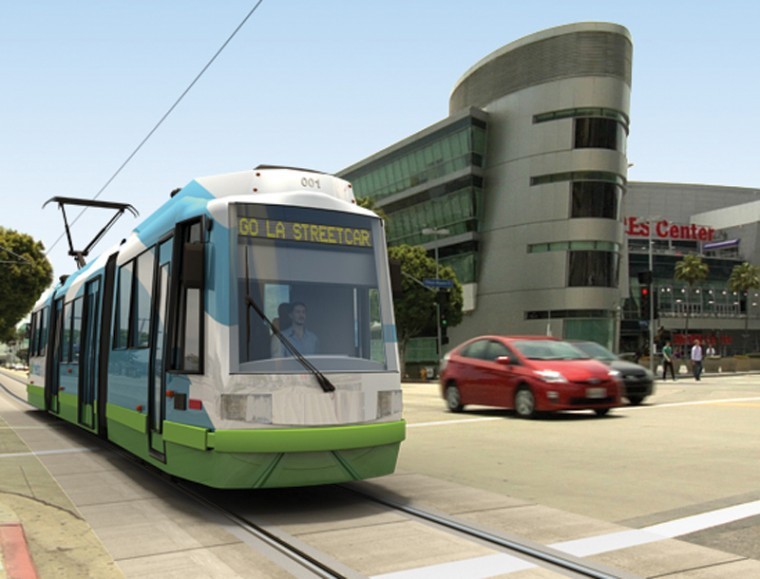
la-lrt-stc-sim-trf_Wilder-Utopia
Simulation of proposed streetcar in downtown LA [Source: Wilder Utopia blog].

Los Angeles, California — In a victory for supporters of a proposed electric streetcar line in downtown LA, who have campaigned for years, on March 6th the Los Angeles City Council okayed up to $352 million to cover the streetcar’s operating and maintenance (O&M) costs for three decades. Operation would be covered for 18 hours a day, seven days a week.

A March 6th story in the Los Angeles Times cited officials’ explanation that “The money will come from Measure R, the 2008 ballot measure that added a half-cent sales tax to fund county transportation projects….”

Linking the Civic Center to the Convention Center, according to the Times, the 3.5-mile loop “would run primarily along three of downtown’s main arteries — Broadway, Hill and Figueroa streets — and connect various neighborhoods, including the old banking district, South Park, Civic Center and the fashion district.” The proposed route stretches 10 blocks along Broadway before it veers over to L.A. Live and then runs through the financial district. Other streets it would run on, in addition to Broadway, include 11th, Figueroa, 7th and Hill.
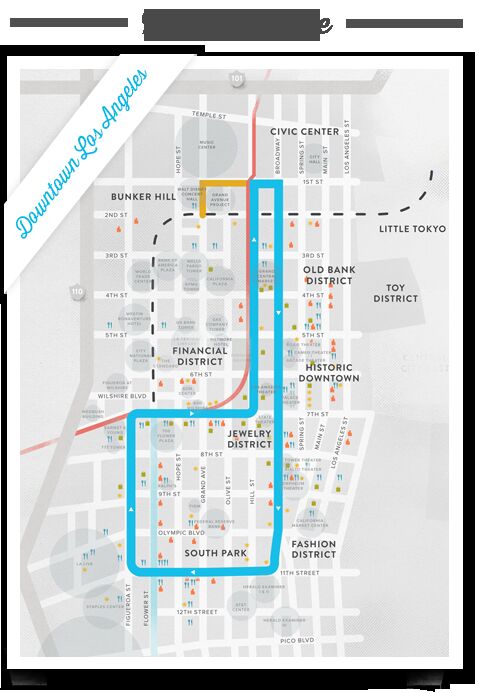
la-lrt-stc-map-proposed-2012_streetcar-dot-la
[Map source: Streetcar.la]

Investment cost of the streetcar project is estimated $125 million. This past December (2012), approximately 70% of voters approved creating a tax assessment district to finance the local share of the project capital investment, and federal funds are being sought to finance $75 million of the total. The line is currently projected to open in 2016.

Councilman Jose Huizar, who sponsored the motion to approve the O&M funding, issued a statement that declared: “We are rapidly moving from a city that focuses on how many cars we can move to one that asks how many people we can move, and what are the best ways to do that.”

As the March 6th LA Times report further noted,

Supporters have emphasized the trolley’s potential to create economic growth in downtown, particularly along Broadway, where the city is working to revive old theaters and other historic buildings. Studies commissioned by the city have estimated that the streetcar could create 9,000 jobs over 25 years.

A December 4th LA Times story emphasized the strong popular support for the streetcar, perceived as a “missing transportation link”. The paper quoted downtown developer Scott Denham, vice president of Evoq Properties:

If you’re in New York, or San Francisco or Portland, you forget about your car. You walk, you take public transportation, and you get a much richer experience. The whole concept of being in L.A. and not having to drive to have a whole Saturday or Sunday to experience downtown … It’s really not that far off in reality.
New Orleans — New streetcar project for North Rampart-St. Claude advances


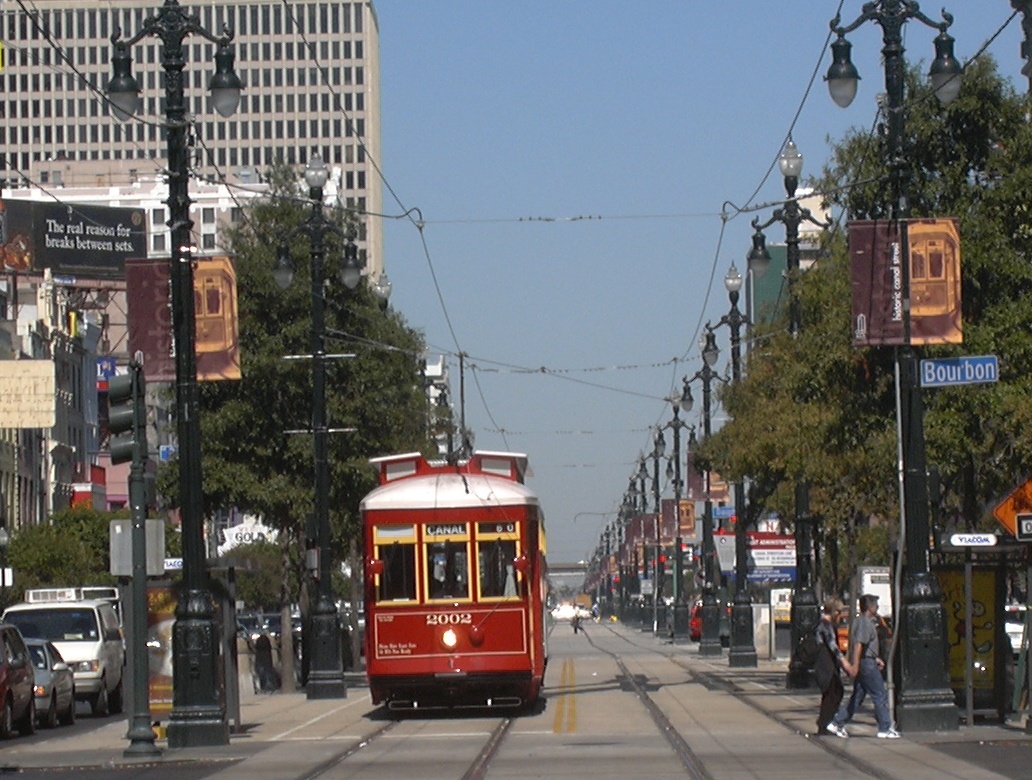
no-her-stc-Canal-St-10041-20030917x_lh
Heritage-style streetcar on Canal St. [Photo: L. Henry]

New Orleans, Louisiana — Just a bit over a month since this city’s Regional Transit Authority (RTA) opened its brand-new Loyola streetcar line, the RTA has revved up its plans for yet another new line, this one along historic North Ramparts St. and St. Claude Avenue.

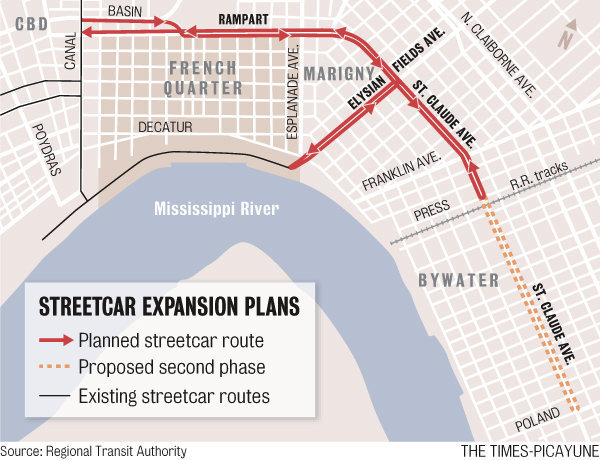
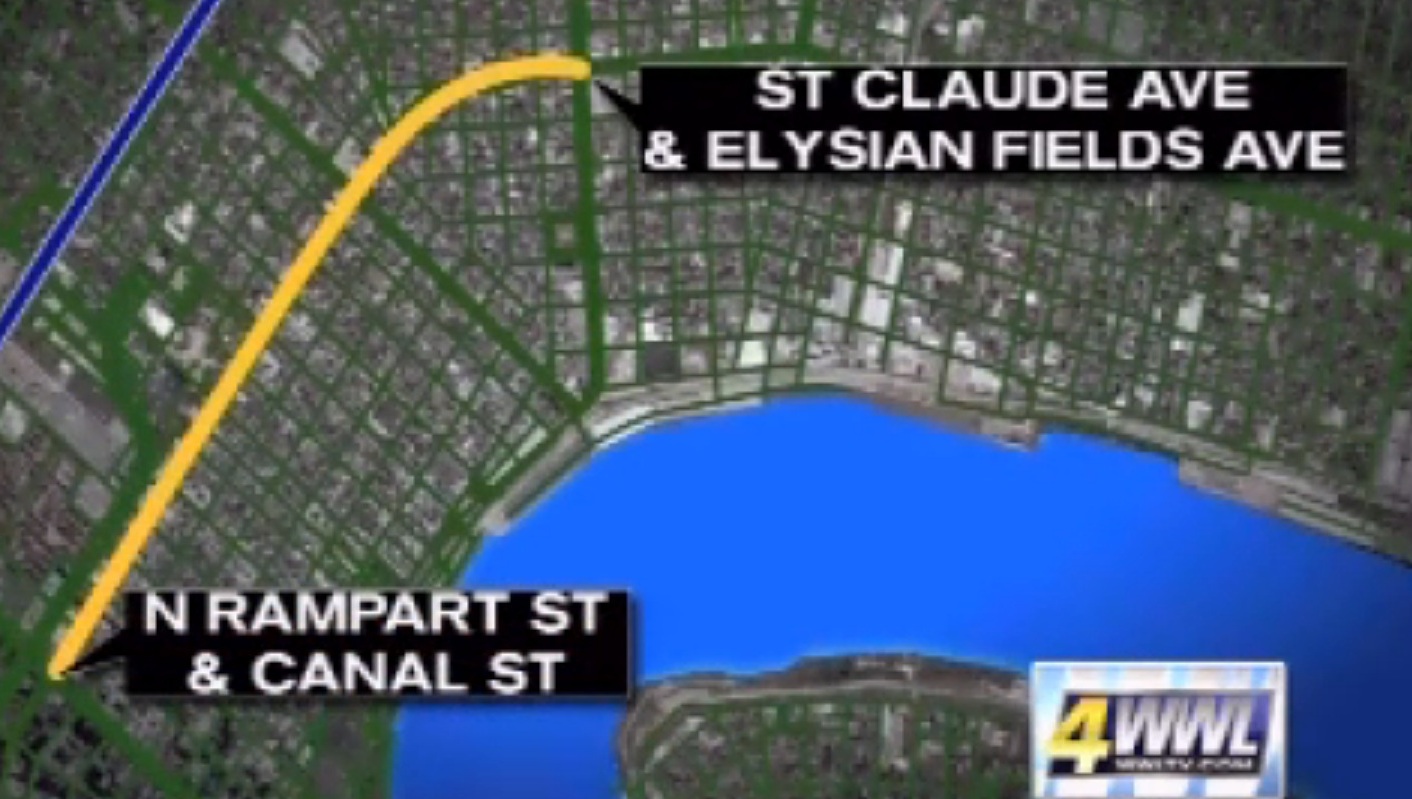
The new streetcar line would extend about 1.5 miles from busy Canal St. to Elysian Fields Ave. Originally the plan was to include a 1/2-mile spur down Elysian Fields, but evidently cost constraints have forced RTA to put the spur line on hold.

no-her-stc-map-Rampart-St-Claude-plan-2013-Mar-x_scrnshot-WWL-TV
Map of proposed N. Ramparts-St. Claude streetcar route. [Screenshot of WWL newscast]

no-her-stc-map-plan-Rampart-St-Claude-Elysian-Fields-20110125_RTA_Times-Picayune
Map of originally proposed N. Ramparts-St. Claude-Elysian fields line. [RTA and Times-Picayune]

The cost for the entire N. Ramparts-St. Claude-Elysian Fields project was estimated at $115 million in 2011, or about $121 million in 2013 dollars (roughly $45 million/mile).

New Orleans uses heritage-style streetcars on its system. The St. Charles line — oldest continually running car line in North America — runs original, historic 1920s-era Perley Thomas cars. Rolling stock on other lines, including the Canal and Loyola lines, are replica cars constructed by a partnership of RTA and Brookville Equipment Corporation.

Streetcars are broadly popular in New Orleans, and judging from a news report from WWL-TV, one could infer that there’s lots of support for the current extension project. Catherine Markel, owner of a wine store on St. Claude, emphasized that “revitalization of this corridor is important to me”, and she wouldn’t have opened her store unless she was sure the project was under way.

RTA bus riders interviewed by in the TV report also were enthusiastic. Bus commuter Altra Lindsey said that having another way to travel between the Lower 9th Ward and where she needs to go would be a beneficial addition to her daily commute.

“No one wants to stay here a long time waiting for the bus. If they had two forms of transportation things would move a long a little quicker…” Lindsey told the TV reporter.

More on this project, and the video report, are available at the original WWL link:

http://www.wwltv.com/news/North-Rampart-Saint-Claude-Avenue-Streetcar-Project-Moves-Forward-195789611.html

Atlanta Streetcar construction pushes forward


atl-lrt-stc-sim-narrow-str-2010_Atl-Stc-Prj
Simulation of Atlanta Streetcar on inner-city neighborhood street.

Atlanta, Georgia — Atlanta is another major U.S. city where streetcar mobility is making a comeback.

A recent article in Maria Saporta’s Saporta Report blog provides an update on the progress of the project. Quick summary: It’s several months behind, and about 5% over budget, mainly because of unforeseen problems with underground utilities. But the construction budget gap has been reduced from $10 million to about $5 million, and fingers are being crossed that that service will begin in the spring or early summer of 2014.

While the 2.62-mile streetcar project’s construction budget includes a financial buffer for contingencies — intended to offset exactly these kinds of cost overruns — and its enough to cover the current gap, says Saporta, “the project team does not want to use up all of its contingency budget in case other issues come up.”

Organized as a public-private partnership between the City, MARTA and the private Central Atlanta Progress/Atlanta Downtown Improvement District, the Atlanta Streetcar project is estimated to have a total cost of $92.7 million. Federal aid in the form of a $47.7 million TIGER II grant “gave the project life” says Saporta.

Based on Saporta’s tally, here’s a total budget breakdown for the project (millions):

• Federal TIGER grant — $47.7 million
• City of Atlanta — $15.6 million
• Atlanta Downtown Improvement District — $6 million

That adds up to an “initial net project total” of $69.3 million reports Saporta.

The rest of the budget includes:

• City of Atlanta — $9 million for streetcars (rolling stock)
• Department of Watershed Management — $8 million to move water and sewer utilities
• Livable Centers Initiative grant — $5.1 million for transit and pedestrian enhancements
• Another LCI grant — $1.25 million to convert Luckie Street into a two-way thoroughfare.

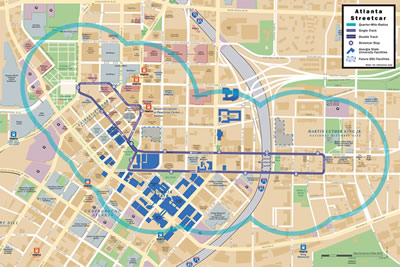
atl-lrt-stc-map-2013_Atl-Stc-Prj
Map of Atlanta Streetcar starter line route.

A.J. Robinson, president of Central Atlanta Progress, reports Saporta, emphasized how optimistic he was reharding the impact that the Atlanta Streetcar will have on Atlanta’s downtown. Already a number of new developments are being planned along the route.

“The building of the Atlanta Streetcar is the dawn of a new era for transit — one that can begin to transform the way we get around in our community” enthuses Saporta.

For more on the project, including a discussion of operating options, read the original article

Tucson — Streetcar project continues moving forward


tuc-lrt-stc-rend-x5-sideview-median-cars-2007_rta
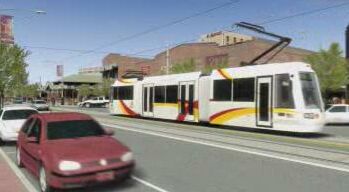
Simulation of Tucson streetcar line. [Graphic: Regional Transportation Authority]

Tucson, Arizona — This medium-size city’s electric streetcar project continues to advance, according to a Jan. 14th report in the Arizona Daily Star.

While there’s still a lot of work to do, what’s left should be a whole lot less disruptive to traffic, businesses and neighborhoods, according to project manager Jesse Gutierrez.

Like all such projects using urban streets, Tucson’s streetcar construction has grappled with relatively ancient underground utilities, such as 100-year-old pipes in bad condition, as well as newer obstacles such as fiber optic cables. Nevertheless, according to Gutierrez and Tucson Transportation Director Daryl Cole, the construction schedule has been accelerated on some streets, including those near the Tucson Convention Center, to get heavy work finished before major events at the center coming in the next few weeks.

The article reports that most of the rail infrastructure is now in place. “There’s rail on the streets on the University of Arizona campus, University Boulevard, Fourth Avenue, parts of Congress Street and Granada Avenue.”

For more, read the article

[Streetcar simulation: Regional Transportation Authority]


Streetcar planned for another Washington, DC suburb


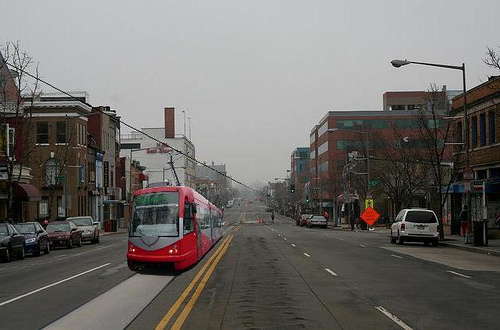
KONICA MINOLTA DIGITAL CAMERA
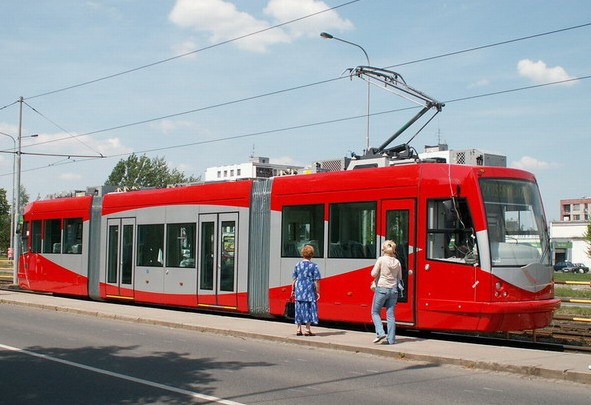
Inekon Trio streetcar for Washington’s new line.

The Washington, DC area already has streetcar plans — a line on H Street in the central city and along Columbia Pike connecting the Virginia suburbs of Arlington and Fairfax — and now there’s another suburban line on the planning table. According to a December 30th report in the Washington Post, “Arlington County is planning a 2.5-mile-long streetcar line along the Route 1 corridor between Crystal City and the Alexandria city limits.”

Serving what currently is “a high-rise, car-centric area” according to the article, the line is intended by planners to “help to create a walkable neighborhood with street-level retail, dense housing and offices.”

It’s all part of a nascent regional network of light-rail projects, which combined with existing Metrorail, VRE commuter rail, buses, car- and bicycle-sharing and pedestrian-friendly paths, would remake the urban landscape into distinctive destinations.

With an investment cost currently estimated at $146 million, the project would apparently be financed from a special commercial real estate tax plus tax increment financing (which would rely on future increases in real estate value to help fund for infrastructure improvements such as rail transit).

For more on this, see the original article.

wdc-lrt-stc-sim-str-2012_DC-Condo-Loft
Simulation of streetcar in street.